Never Say No: What Farmer Tom Lauerman Taught Me About the Long Game
Friends and followers, I have to tell you about this one.
I sat down with Farmer Tom Lauerman for a new episode of Unscripted Cannabis, and I came in with questions ready. I didn’t get to one of them. His introduction turned into the whole episode: thirty-two minutes on a 1999 raid in San Diego, a nursery in Washington State, and two days spent teaching federal scientists from the CDC what a cannabis farm actually looks like.
Some of you might look at Tom and see somebody grandfatherly. I’d say he’s closer to godfatherly when it comes to cannabis and hemp. So buckle your seat belts, folks. This one is a ride.
The worst thing already happened, so now what?
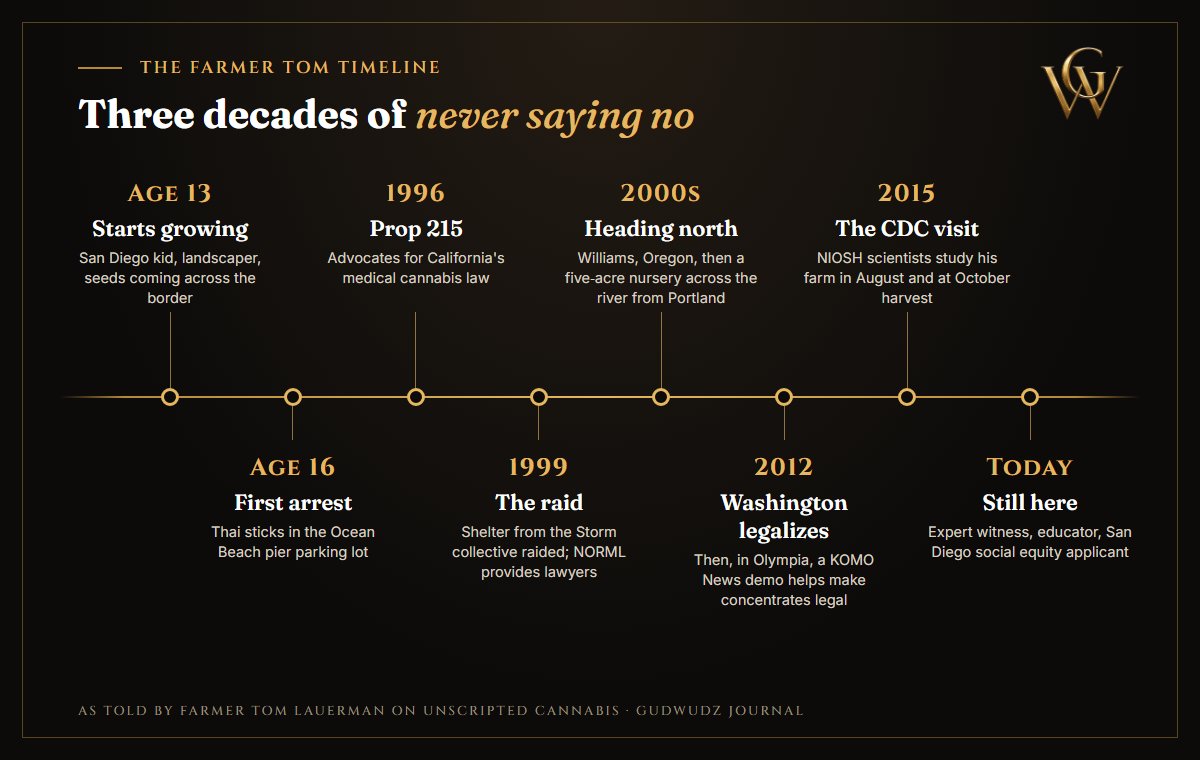
Tom is a San Diego kid. He was doing landscaping young, seeds were coming across the border, and he started growing at thirteen. At sixteen he caught his first arrest. He’d just finished surfing at Ocean Beach when a guy in the pier parking lot kept pressing him. Tom pulled out a Thai stick. The cuffs went on.
Here’s what he said about that day, and I haven’t stopped thinking about it:
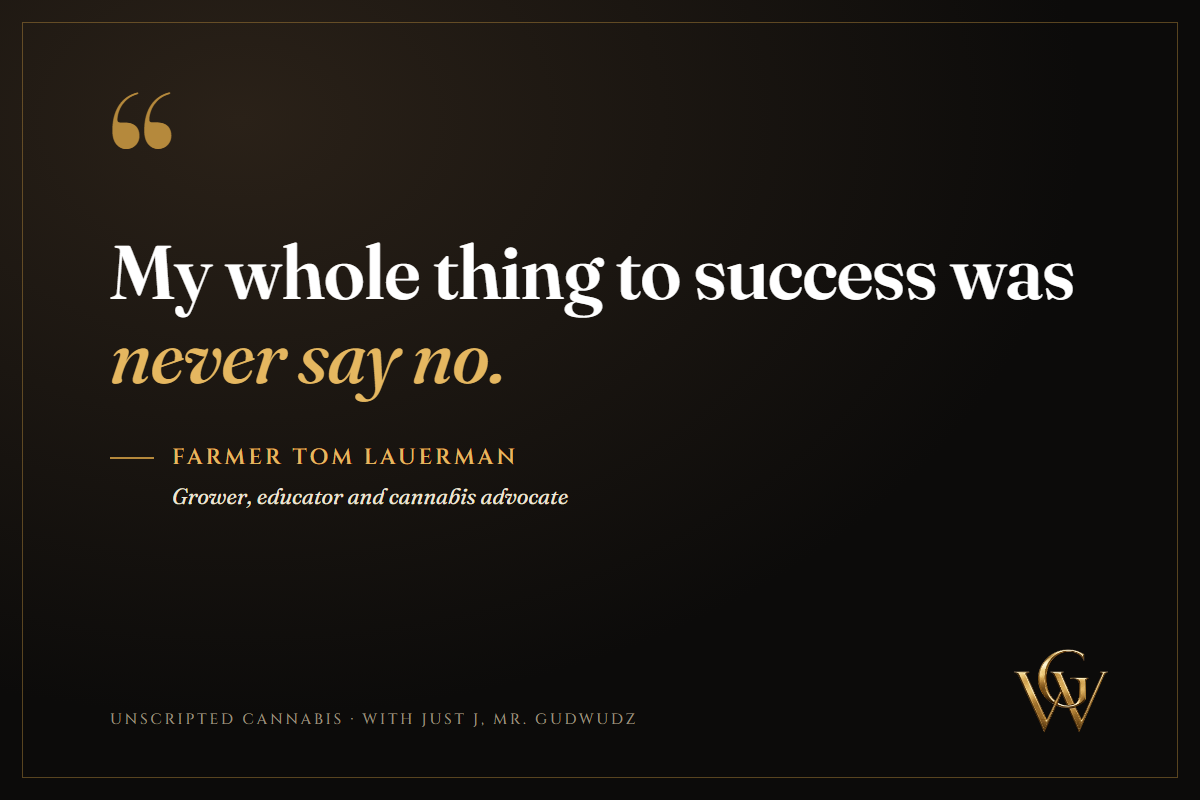
Once you get arrested, the worst thing has happened and you really become an advocate for the plant at that point.
Farmer Tom Lauerman
I know something about that. I grew up in the church in Jackson, Mississippi. Deep in it. Elder. Sunday school teacher. I watched the systems I was told to trust fail the people I loved, and once you see that, you can’t unsee it. The worst thing already happened. The only question left is what you’re going to build with it.
Tom chose advocacy. He’s been at it ever since.
A collective that ran on the honor system
After California passed Prop 215 in 1996, Tom became the grower for a collective called Shelter from the Storm. Twenty patients. Every race, creed and color. He calls it the Noah’s Ark of cannabis collectives.
Listen to how it worked. It wasn’t a storefront. You paid 50 bucks a month if you could afford it. Once a week you came by and filled your jar on the honor system. They shared meals. They showed up for each other.
Tom called it “the real grassroots of it all.” Then he said the line every community builder should keep in their pocket:
We knew we were more powerful together as a group than each of us individually.
Farmer Tom Lauerman
If you read what I wrote here about the circle being the point, you know where my head goes with that. Tom was building the circle back when it could get you arrested.
And in 1999, it did. Tom’s dog nipped at the fence, the neighbor’s dog nipped back, the neighbor called the police, and the raid came down on the collective garden. Tom was arrested with 448 plants. But Tom’s crew had been showing up to town hall meetings with four-inch plants in hand, so they knew the reporters. His wife, the collective’s nurse practitioner, grabbed the cordless phone and worked the media list. When the cameras are there, the police have to play by the rules.
NORML stepped in with free lawyers. San Diego started its first medical marijuana task force. On the day of the trial, with another protest outside the courthouse, the charges went on the shelf.
Being an advocate means being an educator
Tom says he got tired of the cops following him around San Diego, so he and his wife headed north, first to Williams, Oregon, then to a five-acre nursery across the Columbia River from Portland.
When Washington was working out what legal cannabis would look like, Tom spent a lot of time in Olympia. Butane hash oil explosions were in the news, and lawmakers thought concentrates meant BHO and nothing else. So Tom pulled the top extraction people together for live demos with KOMO News. His argument was plain. If you don’t regulate and tax it, people keep blowing themselves up. Within a week, he says, they changed course and made concentrates legal.
Being an advocate’s more about being an educator.
Farmer Tom Lauerman
The day the CDC learned from a farmer instead of YouTube
That work got a union’s attention, and the union connected Tom with federal scientists planning a health hazard evaluation. Tom asked the CDC team where they were getting their information.
Their answer, as Tom tells it: YouTube.
So in August 2015, Tom made his farm a secure location where federal researchers could learn, touch and study the plant. Six of them came for two days, and he brought in the top labs, extractors and equipment makers so they’d see the whole picture. They came back in October to watch the harvest, trimming day included, with the crew wired up to a CyberGlove.
What came out of it was the first federal NIOSH look at hazards on an outdoor cannabis farm. The Lund Report covered the findings in 2017, including the strain that hours of hand trimming puts on workers. That’s protection for working people, and it started because one farmer said come see for yourself.
Tom says folks over there still call him “the seed that started it all.”
Never say no, and keep your name
Here’s the part I keep turning over as a brand builder.
Tom told me about the call from a group of designers who wanted him to be the first person to put his name on a line of cannabis products. They asked when he could come. He said tomorrow. They said they’d be ready around 8:30. He was pounding on the door at 8:15.
But he told me the other half too. His lawyers warned him off the deals where somebody else ends up owning your name, your face and your brand. So he kept control of his name and likeness. Today he’s a hemp and cannabis expert witness, sits on the American Council of Cannabis Medicine, and holds social equity status back in San Diego.
Meanwhile, he says, about ninety percent of the businesses that pushed the OGs out of the way are gone. Tom is still here. In his words, “We’re still gonna be here fighting for the plant.”
Why this conversation sits close to GUDWUDZ
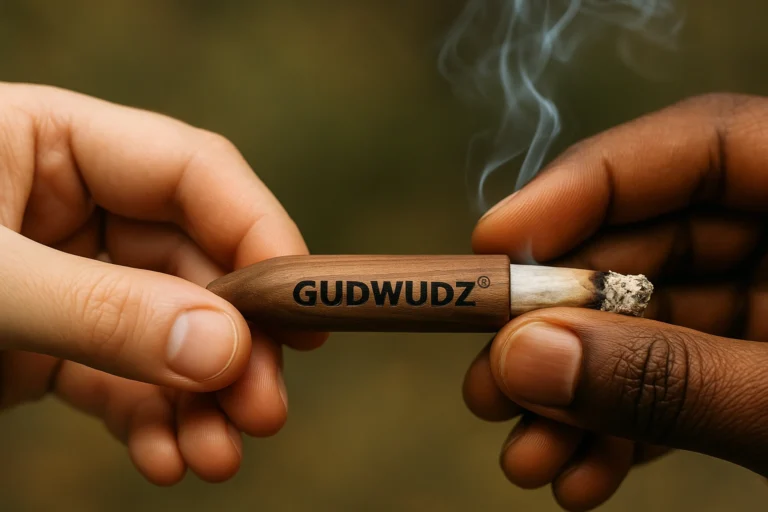
I didn’t build GUDWUDZ to be loud. I built it because the ritual deserves something worth keeping. Solid walnut. Finished by hand. Made to outlast the trend.
Tom’s whole life is that idea at a bigger scale. Play the long game. Keep your name. Build the circle on purpose. Show up at 8:15 when they said 8:30.
And he’s coming back. Tom offered a part two, a question-and-answer round on where cannabis really stands and what’s going on behind the scenes. So send me your questions, and I’ll bring them to him.
Until then, listen to the full episode, Farmer Tom Lauerman: From a 1999 Raid to Teaching the CDC About Cannabis, and read the Unscripted Cannabis episode recap. You can find Tom at Farmer Tom Organics, where he offers cannabis farm consulting and trains growers through Hemp Farming Academy.
And whatever you smoke, hold something worth keeping. Explore the GUDWUDZ collection.
GUDWUDZ is a handcrafted walnut smoking accessory brand rooted in culture, craft and intentional living. Just J, also known as Mr. Gudwudz, hosts conversations on Unscripted Cannabis. More from Just J at mrgudwudz.com.